Data visualisation
Every data set is a story that hasn't been told yet.
Numbers stay numbers until someone decides to read them properly. Inside most businesses there are data sets full of patterns, trends and truths that could change how people understand what is happening. But the numbers get in the way. Not because the data is uninteresting — because nobody has given it a shape that people can actually relate to.
That is what we do. We take complex data and turn it into bespoke visualisations that tell the story the numbers have been holding.
The process starts with the data itself. We invest time understanding what you have. Not just the format and the structure, but what the data actually represents. Data directly represents the story, and understanding that story is absolutely essential before a single chart is designed. We look at what the numbers say, what they don't say, and what shape would make the meaning visible to the people who need to see it.
Not every data set requires a bespoke visualisation. A standard bar chart does a perfectly good job when the story is simple. But where there is scope, where the data is rich enough and the story is layered enough, that is a gold mine. That is where a well-designed visualisation can tell a story in a way that stays with people long after they have closed the tab.
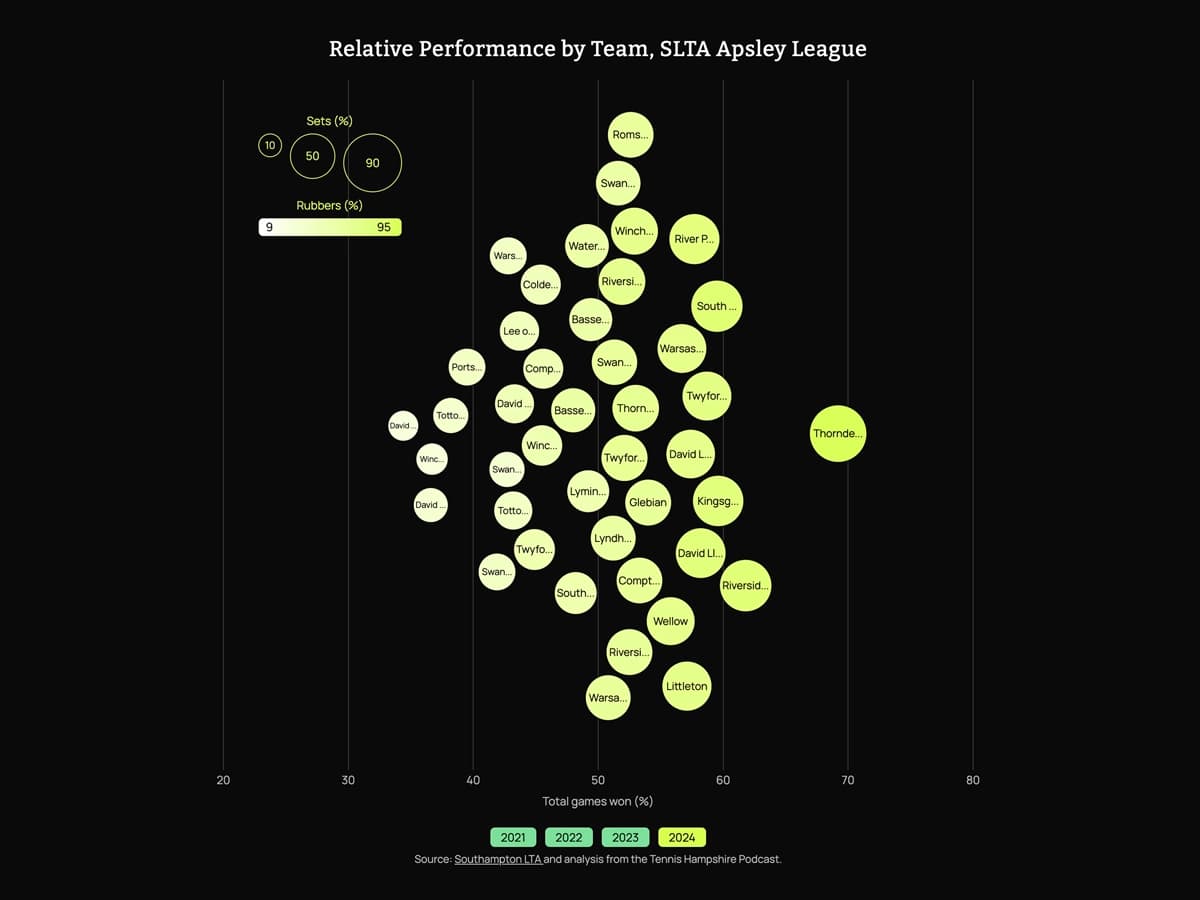
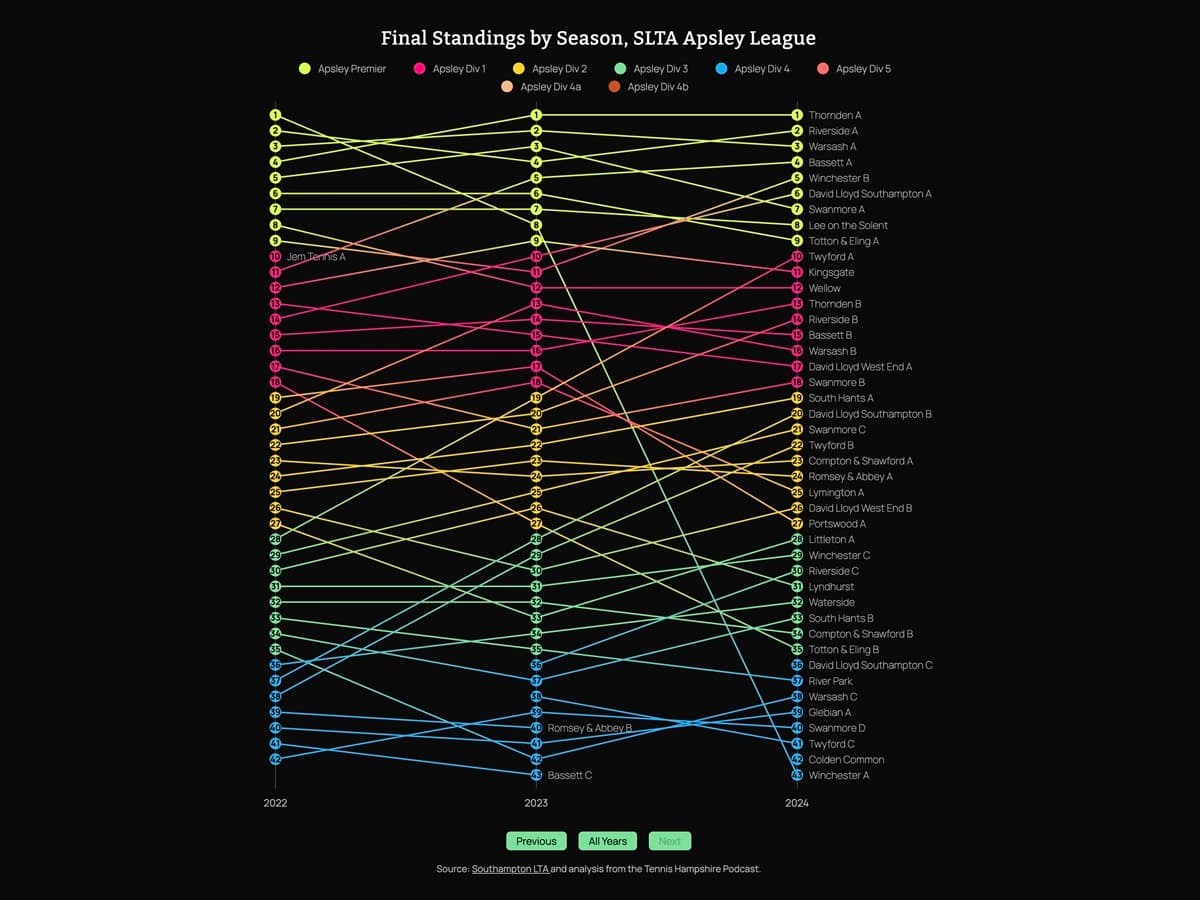
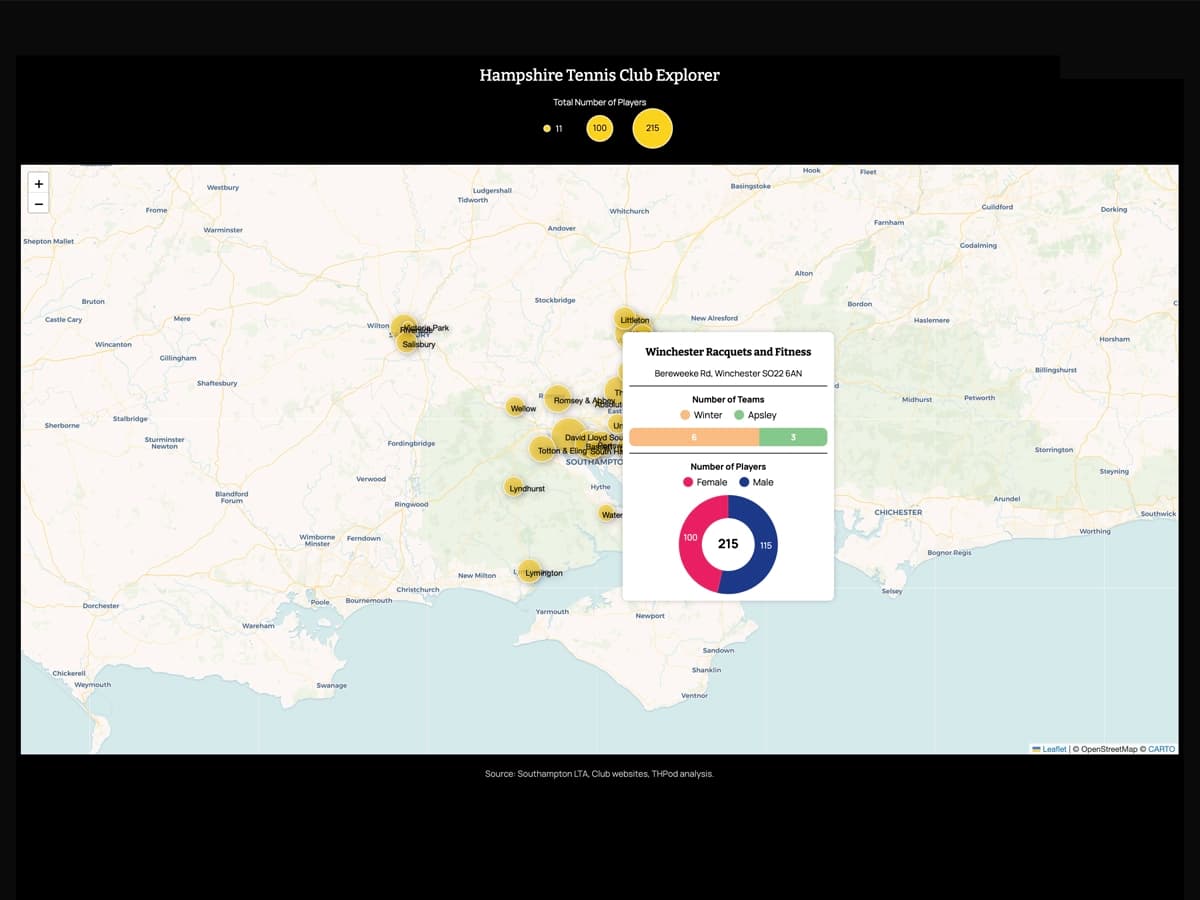
For the Tennis Hampshire Podcast, we built a suite of interactive visualisations including performance charts, league standings and geographic mapping, all live on thpod.uk. Each one tells a different story from the same underlying data. Each one gives the audience a way to explore and understand something they could never see in a spreadsheet.
We build for screens, dashboards and print. Interactive visualisations that users can explore, static visualisations designed for reports and presentations, and dashboards that clients can update themselves or that we maintain. We choose the right tools for the data and the audience, and the result is always built around the story the numbers need to tell.
If your business has data that deserves to be read properly, we would like to see it.
Explore services
- SocialMedia
- DataVisualisation
- GraphicDesign
- WebDesign
Data visualisation work
Flip the card to see details
Common questions
What kind of data visualisations do you create?
We design bespoke interactive and static visualisations including charts, maps, dashboards, infographics and more. We work with tools like D3.js, Leaflet, Python (for data processing, modelling and static charting) and other libraries depending on what the data and the story need. We build for screens, dashboards and print.
Do you work with raw data or does it need to be prepared first?
We work with whatever you have. If your data needs cleaning or restructuring before we can visualise it, we handle that. If it is already well-organised, we move straight to the design phase. The goal is to remove friction so the story in your data gets told.
Can clients update the dashboards themselves?
Yes, depending on the project scope. We can build dashboards that you update independently, or we can maintain and update them for you on an ongoing basis. We define this together at the start.
How is bespoke data visualisation different from standard charts?
Standard charts like bar charts, line graphs and pie charts work well for simple stories. Bespoke visualisation is for data that is too rich or too complex for a standard format. It gives the data a custom shape designed specifically for your audience and your story. The result is something people remember, not something they scroll past.
Can the visualisations go into printed reports?
Yes. Static visualisations for print are a standard output — we work with our graphic design service to embed them into reports and presentations. See examples in our portfolio.
Got data that deserves to be seen?
Send us the numbers and we will show you what they are trying to say.
Get in touch →